
Protein is one of the most important nutrients for your body. Whether you want to build big muscles, lose stubborn fat, or just stay healthy as you get older, you need protein. But the big question is: How much do you actually need?
Many people guess the number, but guessing can stop your progress. This is where a reliable Protein Intake Calculator becomes your best friend. In this guide, we will explain everything you need to know about calculating your protein, how it changes based on your goals, and why “one size fits all” does not work for nutrition.
Why Do You Need a Protein Calculator?
You might think, “Can I just eat a lot of chicken and eggs?” You could, but nutrition is a science. Eating too little protein can lead to muscle loss and weakness. Eating way too much can lead to unnecessary calories.
Using a Protein Intake Calculator helps you find the “sweet spot.” It takes the guesswork out of your diet. Your body is unique. Your protein needs depend on your weight, height, age, and how much you move during the day.
If you are serious about your health, you cannot ignore the numbers. A daily protein intake plan tailored to your specific body metrics is the first step toward success.
How Does the Calculation Work?
When you use a Protein Intake Calculator, it uses scientific formulas to give you a result. It doesn’t just look at your total weight; it looks at what your weight is made of.
1. Understanding Lean Body Mass
One of the most critical factors is your lean body mass (LBM). This is your weight minus the fat. Muscle needs protein to survive and grow; fat does not. A good calculator focuses on feeding your muscles, not your fat cells.
2. Activity Level Matters
Are you sitting at a desk all day, or are you an athlete training two hours a day? Someone who lifts heavy weights tears down muscle fibers. To repair those fibers, they need more amino acids (the building blocks of protein) compared to someone who is sedentary.
3. The Formula
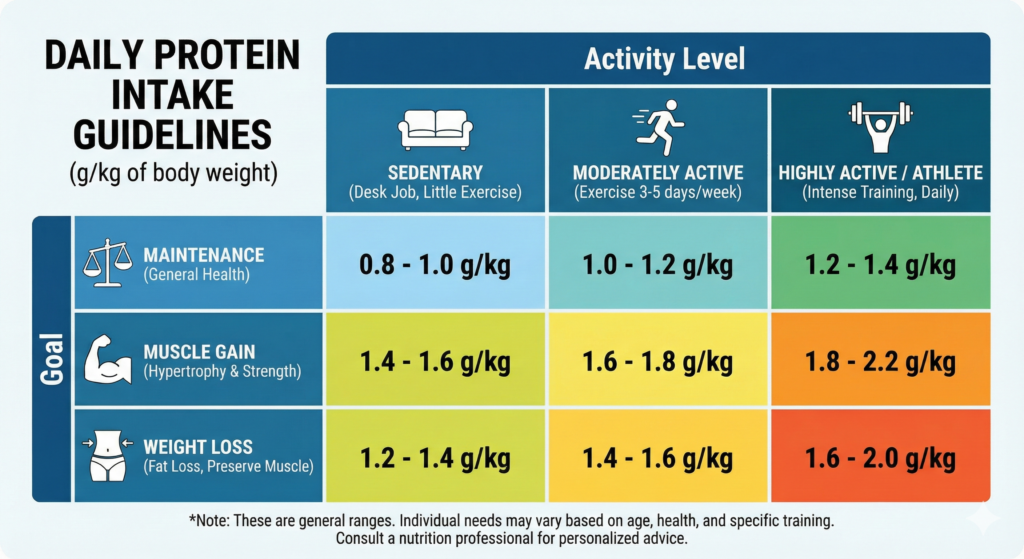
Most standard guidelines suggest 0.8 grams of protein per kg of body weight. However, this is just to prevent deficiency. It is not optimal for looking good or feeling strong. Our Protein Intake Calculator uses advanced ratios to give you a number that actually helps you reach your goals.
Protein for Different Goals
Not everyone wants to look like a bodybuilder. Your goal decides how much you should eat. Let’s break down how the Protein Intake Calculator adjusts for different objectives.
Muscle Gain (Bulking)
If you want to get bigger and stronger, you need to be in a calorie surplus. But you also need a higher amount of protein to turn those extra calories into muscle, not fat.
When you select “Muscle Gain” in the Protein Intake Calculator, it bumps up your numbers. Usually, you will need between 1.6 to 2.2 grams of protein per kilogram of body weight. This ensures that your body has enough fuel to repair tissues after a hard workout. This is essential for hypertrophy (muscle growth).
Weight Loss (Cutting)
This is where people get confused. When you want to lose weight, you eat less food (a calorie deficit). But when you eat less, your body might burn muscle for energy instead of fat.
To prevent this, a Protein Intake Calculator for weight loss will often suggest a higher protein amount than normal. Why? Because protein keeps you full (satiated) and protects your hard-earned muscle while you burn off the fat. High protein is the secret to looking “toned” instead of just “skinny.”
Maintenance
If you are happy with your current weight and just want to stay healthy, you need a maintenance amount. This is usually moderate. It ensures your immune system, hair, nails, and enzymes work correctly without overloading your digestion.
Who Is This Calculator For?
Our Protein Intake Calculator is designed for everyone, but let’s look at specific groups who need to pay extra attention.
1. Men vs. Women
Generally, men have more muscle mass than women, so they need more protein. However, a protein calculator for women is crucial because women are often told to eat too little. Women need protein for bone health and metabolism just as much as men do.
2. The Elderly (Seniors)
As we age, we naturally lose muscle. This condition is called sarcopenia. To fight this, protein needs for seniors/elderly people actually increase. Older bodies are less efficient at processing protein, so they need to eat more of it to get the same benefit.
3. Vegans and Vegetarians
If you don’t eat meat, you can still build muscle. However, plant-based proteins are sometimes less absorbed by the body. A Vegan protein calculator setting might suggest a slightly higher number to make up for the digestion difference. You need to mix different dietary protein sources like beans, lentils, and tofu to get a complete profile.
Best Sources of Protein
Once the Protein Intake Calculator gives you a number (for example, 150 grams), how do you eat that much? Here is a simple list of high-quality foods.
Animal Sources: Chicken breast, turkey, lean beef, eggs, fish (tuna, salmon), and dairy (Greek yogurt, cottage cheese).
Plant Sources: Lentils, chickpeas, black beans, tofu, tempeh, quinoa, and nuts.
Supplements: Whey protein powder or pea protein powder can help if you are busy.
Planning a high-protein diet plan is easier when you know which foods give you the most “bang for your buck.” For example, 100 grams of chicken breast has about 31 grams of protein, while an egg has about 6 grams.
Common Mistakes to Avoid
Even with the best Protein Intake Calculator, you can make mistakes.
Eating it all at once: Your body can’t use 100 grams of protein in one meal effectively. Spread it out over 3 to 5 meals.
Ignoring Carbs and Fats: Protein is King, but don’t forget the other Macronutrient ratio (Carbs and Fats). You need energy to train.
Forgetting Water: High protein diets require you to drink more water to help your kidneys filter waste.
Frequently Asked Questions (FAQs)
Here are the most common questions users ask about protein and our tool.
1. How accurate is this Protein Intake Calculator?
The calculator provides an excellent estimate based on scientific formulas like the Mifflin-St Jeor equation. However, individual metabolism varies. Use the number as a starting point and adjust based on your progress over 2-3 weeks.
2. Can I eat too much protein?
Yes, but it is hard to do. For healthy individuals, high protein is safe. However, eating extreme amounts (like 4g per kg) won’t build more muscle; it will just be stored as body fat or excreted. Stick to the recommendation from the Protein Intake Calculator.
3. Do I need to count vegetable protein?
Yes! Protein from broccoli, oats, and rice counts toward your daily total. While they are not “complete” proteins like meat, they still contribute amino acids that your body uses.
4. Should I consume protein immediately after a workout?
The “anabolic window” is not as short as people think. You don’t need to drink a shake within 5 minutes. However, eating a high-protein meal within 1-2 hours after training is a good habit to start recovery.
5. What if I have a kidney condition?
If you have pre-existing kidney issues, you must consult a doctor before starting a high-protein diet. The Protein Intake Calculator provides general health advice and is not a medical prescription.
6. How do I calculate protein for the Indian diet?
The math remains the same! Whether you eat chicken tikka or lentils (dal), 1 gram of protein is 1 gram of protein. You just need to check the nutrition labels of your local foods to hit the target number.
7. Does protein intake change on rest days?
You should keep your protein intake relatively stable. Your muscles repair themselves while you rest, not just when you are at the gym. Consistency is key, so try to hit the number given by the Protein Intake Calculator every day.
Related Posts
Top 10 High Protein Foods for Vegetarians
Calorie Deficit Explained: How to Lose Weight Without Starving
Best Supplements for Muscle Gain in 2024
- BMI Calculator | Check Body Mass Index Online for Free
Final Thoughts
Nutrition doesn’t have to be complicated. By using our Protein Intake Calculator, you have taken the first major step toward a better body and better health. Remember, the number on the screen is your goal.
Whether you are looking for a Protein calculator for muscle gain or trying to slim down, consistency is the secret. Eat real food, hit your daily protein numbers, train hard, and the results will follow.