
Staying healthy is the most important goal for everyone today. We all want to look fit and feel good. But how do you know if your weight is right for your height? This is where a BMI Calculator comes in handy. It is a simple tool that gives you a quick snapshot of your health status.
In this detailed guide, we will learn everything about Body Mass Index (BMI), how to check it, and what the numbers actually mean for your health.
What is a BMI Calculator?
Before we dive into the math, let’s answer the big question: What is BMI calculator?
BMI stands for Body Mass Index. It is a measurement that uses your height and weight to work out if your weight is healthy. The BMI Calculator is a digital or manual tool that helps you process these numbers instantly. Instead of guessing if you are underweight, normal weight, overweight, or obese, this tool gives you a specific number to help you understand your body better.
Many doctors and health experts use a Body Mass Index Calculator as a screening tool. It does not measure body fat directly, but it correlates moderately with more direct measures of body fat. For most people, it is an excellent starting point to track physical fitness.
Why is BMI Important?
Knowing your BMI is crucial because carrying too much weight can lead to health problems. If your BMI is too high, you might be at risk for:
Heart disease
High blood pressure
Type 2 diabetes
Breathing problems
On the other hand, if your BMI is too low, you might face issues like:
Weak immune system
Bone loss (osteoporosis)
Anemia
Using a BMI Index Calculator regularly helps you catch these issues early. It acts like a warning light in a car, it tells you when something might be going wrong under the hood so you can fix it before it becomes a big problem.
The Science Behind the Numbers: The BMI Formula
You might be wondering, How to calculate BMI? Is it difficult math? Not at all!
The BMI Formula is actually very simple. It is your weight in kilograms divided by your height in meters squared.
Formula: $BMI = \frac{Weight (kg)}{Height (m)^2}$
However, doing this math in your head can be tricky, especially if you measure your height in feet and inches. This is why using a BMI calculator in kg and cm is much easier. You just enter your numbers, and the tool does the hard work for you.
How to Use a BMI Check Online
In the age of the internet, you don’t need a pen and paper. You can easily perform a BMI Check Online. There are thousands of free tools available on websites and apps.
Here is a step-by-step guide on how to use a BMI Calculator Online:
Measure your Weight: Step on a scale. Make sure you are wearing light clothes and no shoes for the most accurate result.
Measure your Height: Stand straight against a wall. Use a tape measure to see how tall you are.
Input the Data: Open the BMI Calculator on your phone or computer. Enter your weight and height.
Get Results: Click the “Calculate” button. Within a second, you will see your BMI number.
It is really that simple!
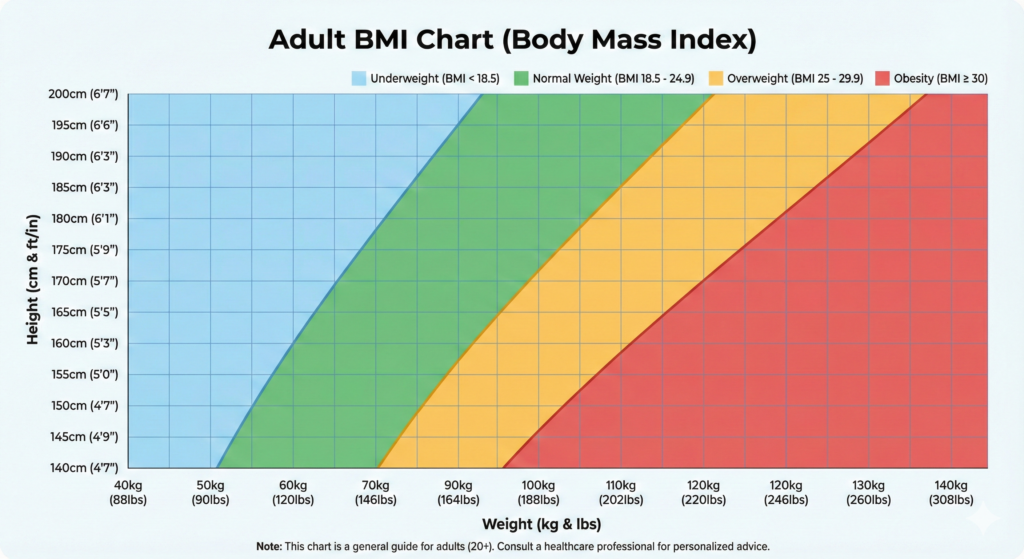
Understanding the BMI Chart
Once you have your number from the BMI Calculator, you need to know what it means. This is where a BMI calculator with chart becomes very useful. The chart divides BMI scores into different categories.
So, What is normal BMI range? Let’s look at the standard categories used worldwide:
Underweight: BMI is less than 18.5
Normal Weight: BMI is between 18.5 and 24.9
Overweight: BMI is between 25 and 29.9
Obesity: BMI is 30 or greater
For example, if you calculate your BMI and the result is 22, you fall into the “Normal Weight” category. This means your weight is generally healthy for your height. If your number is 28, you are in the “Overweight” range, and it might be time to look at your diet and exercise habits.
BMI for Different Groups of People
One size does not fit all. A standard BMI Calculation works for most people, but there are slight differences depending on who you are.
1. BMI Calculator for Men vs. Women
Generally, the math is the same for everyone. However, men and women store fat differently. Women usually have more body fat than men at the same BMI. While the BMI calculator for men and the BMI calculator for women uses the same formula, the interpretation of health risks might vary slightly based on body composition.
2. BMI Calculator for Adults
The standard chart we discussed above is specifically a BMI calculator for adults (people over age 20). For adults, the ranges (Underweight, Normal, Overweight) do not change with age.
3. BMI Calculator for Teenagers and Children
This is where it gets a little different. A BMI calculator for teenagers and children needs to consider age and gender. Children are still growing, and their body fat changes as they get taller. For them, doctors use “percentiles” instead of just the flat numbers.
4. BMI Calculator by Age
As you get older, your body changes. Muscle mass tends to decrease, and fat might increase. A BMI calculator by age helps in understanding that a slightly higher BMI in very elderly people might sometimes be acceptable to protect against frailty, though the standard ranges usually still apply.
Is BMI Always Correct?
A common question people ask is: How accurate is BMI calculator?
The BMI Calculator is a great tool, but it is not perfect. It has some limitations:
Muscles: Athletes with lots of muscle might have a high BMI, but they are not fat. Muscle weighs more than fat. The calculator might say they are overweight, but they are actually very fit.
Bone Density: People with heavy bones might have a higher BMI.
Pregnancy: It is not accurate for pregnant women.
Because of this, you should use BMI as a general guide, not the final word. If you are worried, talk to a doctor who can measure your body fat percentage.
BMI in Different Regions
Did you know that health standards can vary by country? For instance, the BMI calculator India parameters might be slightly different regarding health risks. Research has shown that Asian populations may be at risk for health problems at a lower BMI than Western populations.
In some Asian guidelines:
Overweight might start at a BMI of 23 (instead of 25).
Obesity might start at a BMI of 27 (instead of 30).
It is always good to check guidelines specific to your region if you want the most precise health assessment.
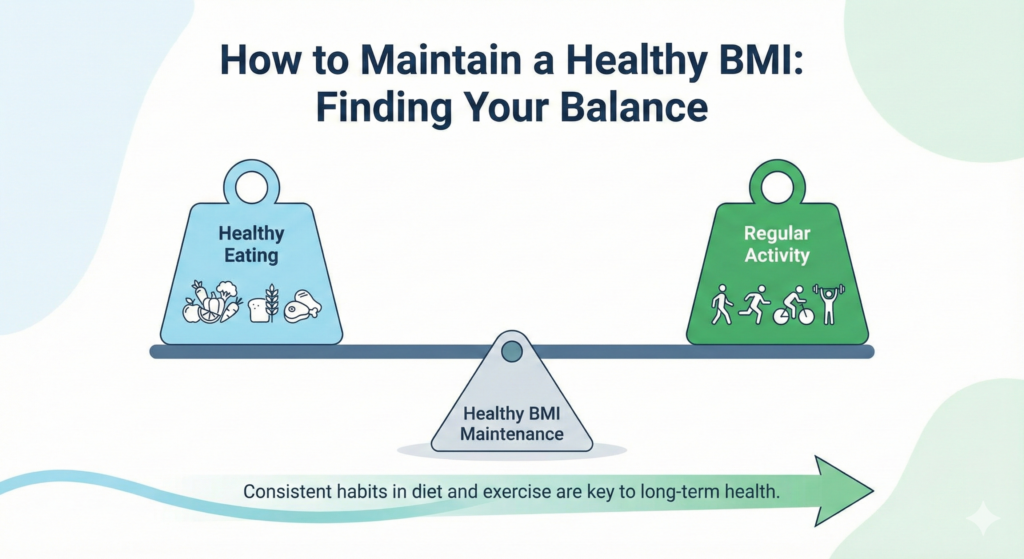
How to Maintain a Healthy BMI
If you used the BMI Calculator and found out you are not in the “Normal” range, don’t panic. You can change your BMI with healthy lifestyle choices.
If You Need to Lose Weight:
Eat Balanced Meals: Focus on vegetables, fruits, and lean proteins.
Move More: Try to get at least 30 minutes of exercise every day. Walking, running, or swimming are great options.
Drink Water: Sometimes we think we are hungry when we are actually thirsty.
If You Need to Gain Weight:
Eat Nutrient-Dense Foods: Nuts, avocados, and dairy can help you gain weight healthily.
Eat More Often: Have small snacks between your big meals.
Strength Training: Lifting weights can help you build muscle, which adds healthy weight.
Frequently Asked Questions (FAQs)
Here are answers to some common questions you might have about BMI.
1. Can I use a BMI calculator for my child?
Yes, but you must use a specialized calculator for children and teens. Their BMI is compared against charts for other children of the same age and gender, not the adult chart.
2. Is a BMI of 25 bad?
A BMI of 25 is right on the border between healthy weight and overweight. It is a sign that you should be careful with your diet so you don’t gain more weight.
3. Does muscle affect BMI?
Yes. Muscle is dense and heavy. A bodybuilder might check their BMI and see a result that says “Obese,” even though they have very little body fat.
4. How often should I check my BMI?
You don’t need to check it every day. Checking it once a month is enough to track your trends. Weight fluctuates daily, so monthly checks are more accurate.
5. What is the best time to weigh myself for BMI?
The best time is in the morning, right after you wake up and use the bathroom, but before you eat breakfast. This gives the most consistent weight reading.
6. Can I calculate BMI without a scale?
No, you need to know your accurate weight to get the right number. Guessing your weight will give you a wrong BMI result.
7. Is BMI the only way to measure health?
No. It is just one tool. Waist measurement, blood pressure, and blood tests are also very important to understand your overall health.
Related Posts
Top 10 Low-Calorie Foods to Help You Lower Your BMI
Simple Exercises for Beginners to Burn Fat at Home
Understanding Body Fat Percentage vs. BMI: What is the Difference?
Healthy Meal Plans for Weight Gain
Final Thoughts
Your health is your biggest wealth. The BMI Calculator is a wonderful, simple, and free tool that helps you keep an eye on that wealth. Whether you are using a BMI calculator for men, women, or checking for your family, the goal is always the same: to live a longer, happier life.
Remember, the number on the scale or the calculator does not define who you are. It just gives you data. Use that data to make smart choices about your food and activity. If you are confused about your results, always consult a doctor. Start your journey to a healthier you today by doing a quick BMI Calculation!